Artwork description
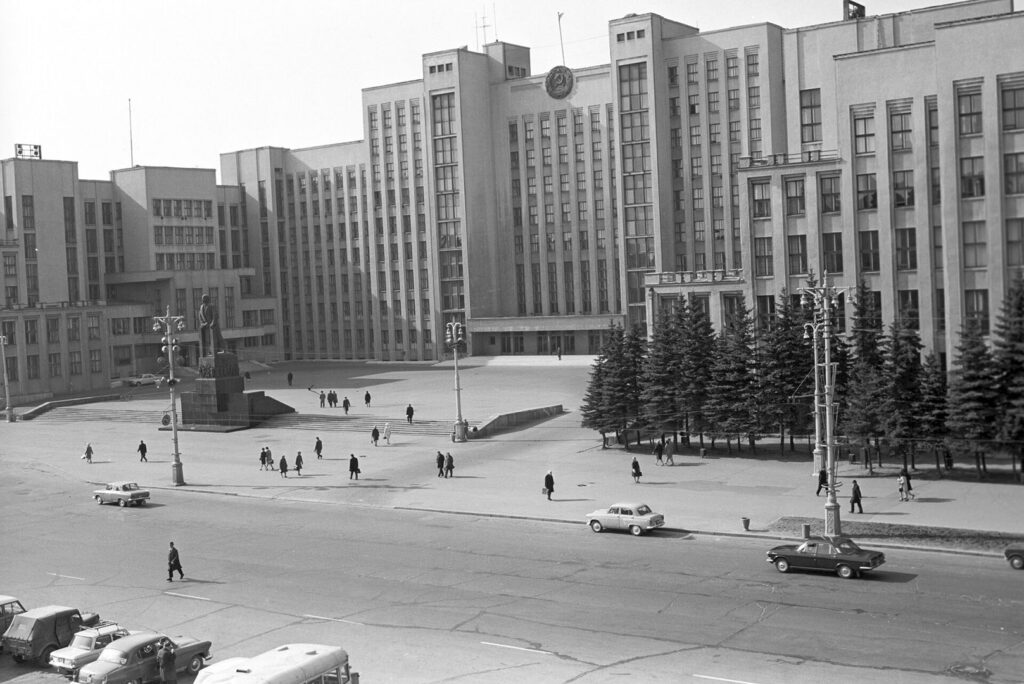
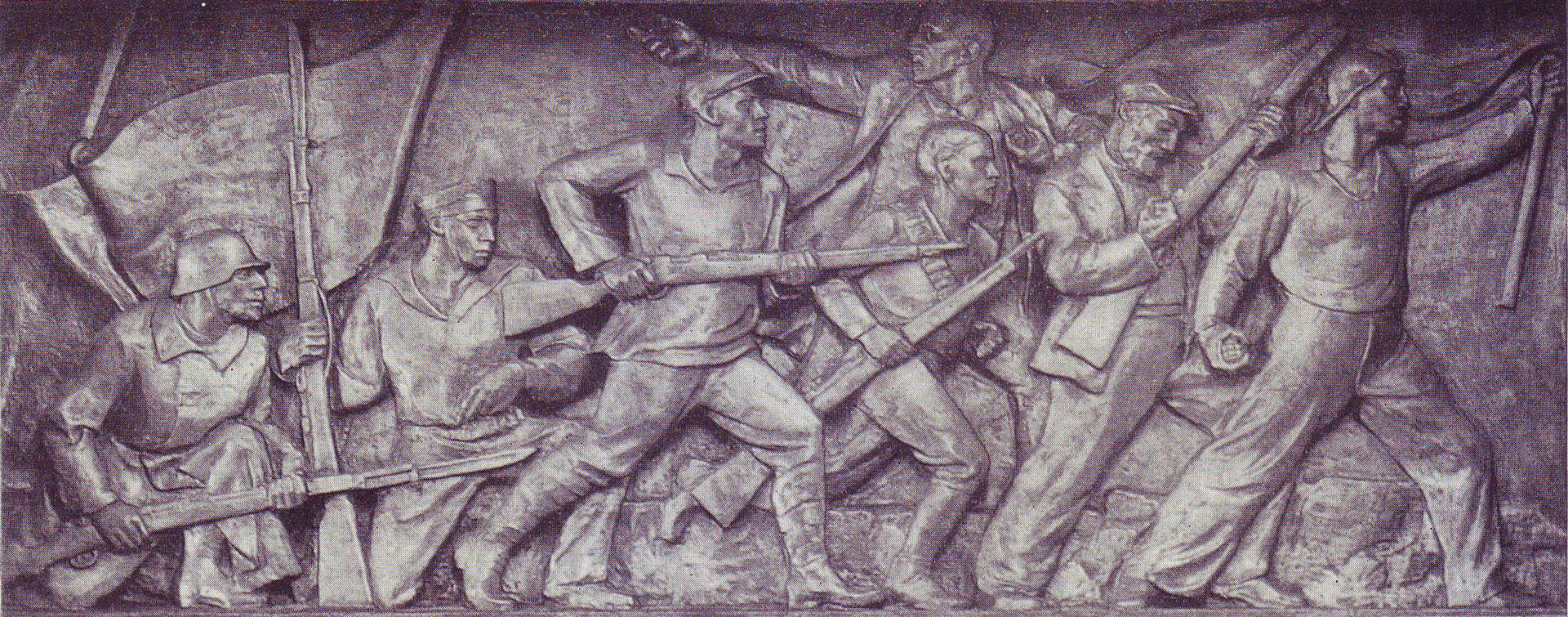
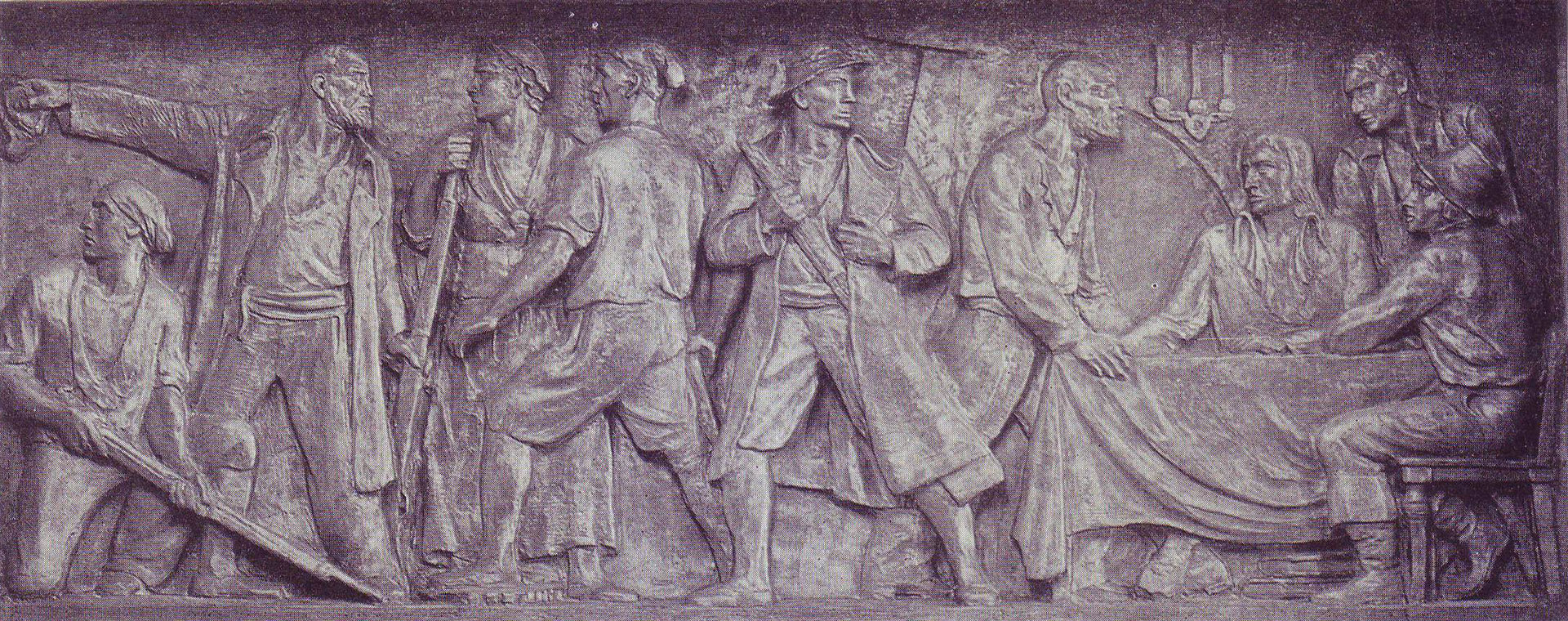
Title: Bas-reliefs in the interior of the Government House
Creation year(s): 1932-1936
High relief
Gypsum, toning
Dimensions: The total length of the sculptural compositions - more than 100m
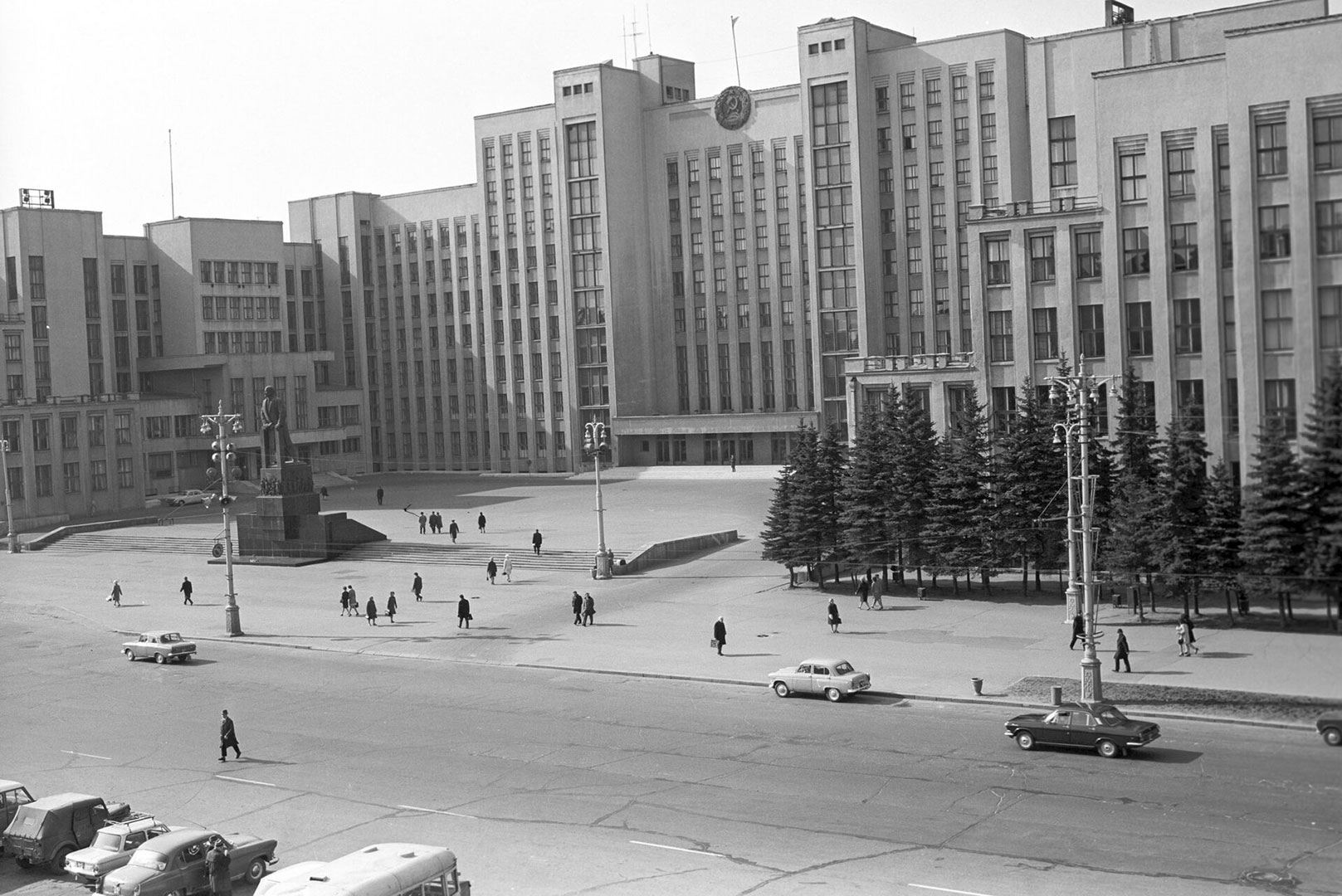
Location: Government House, Independence Square (formerly Lenin Square), Minsk, Belarus.
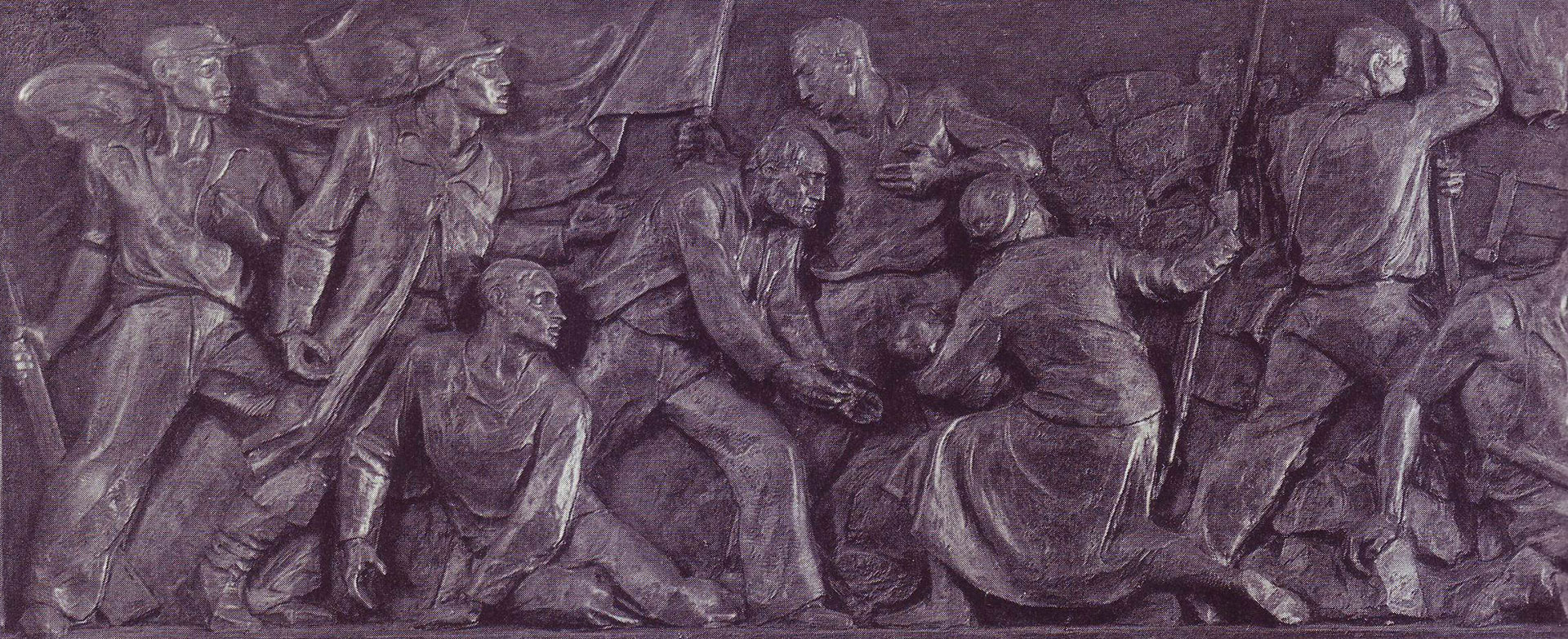
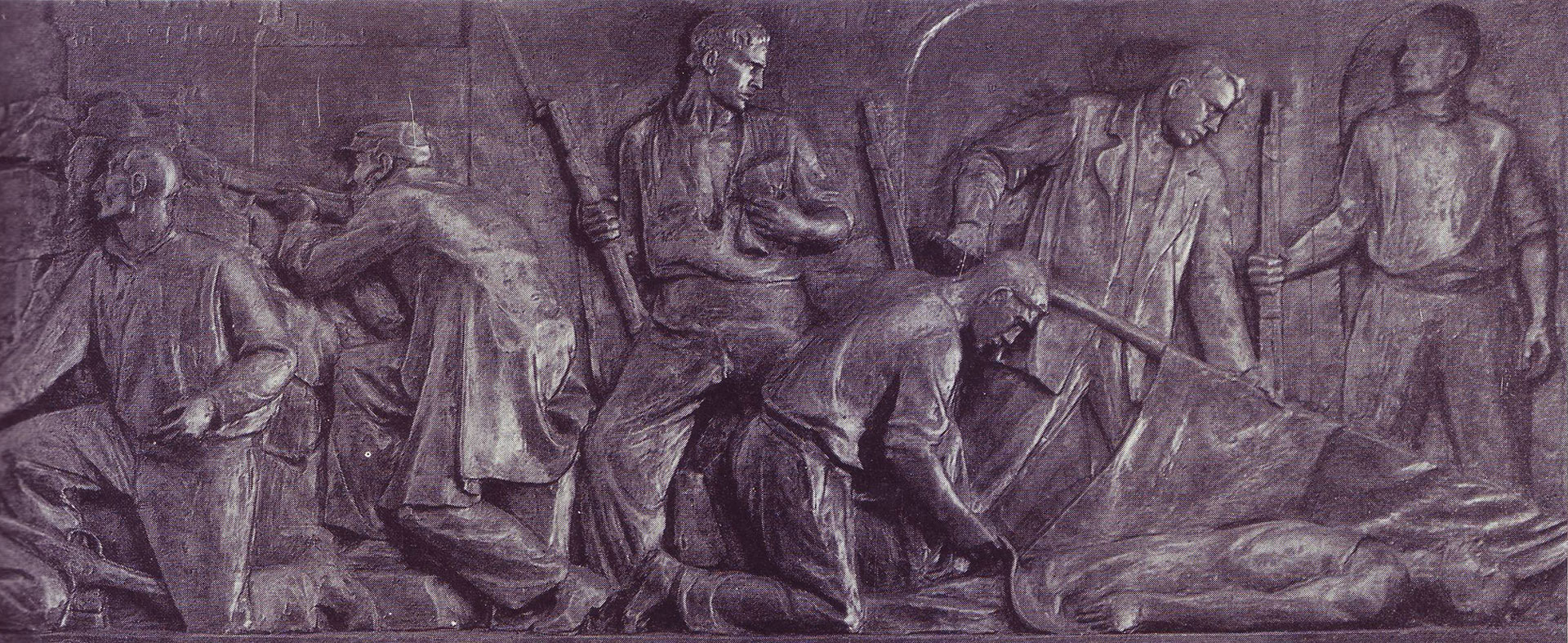
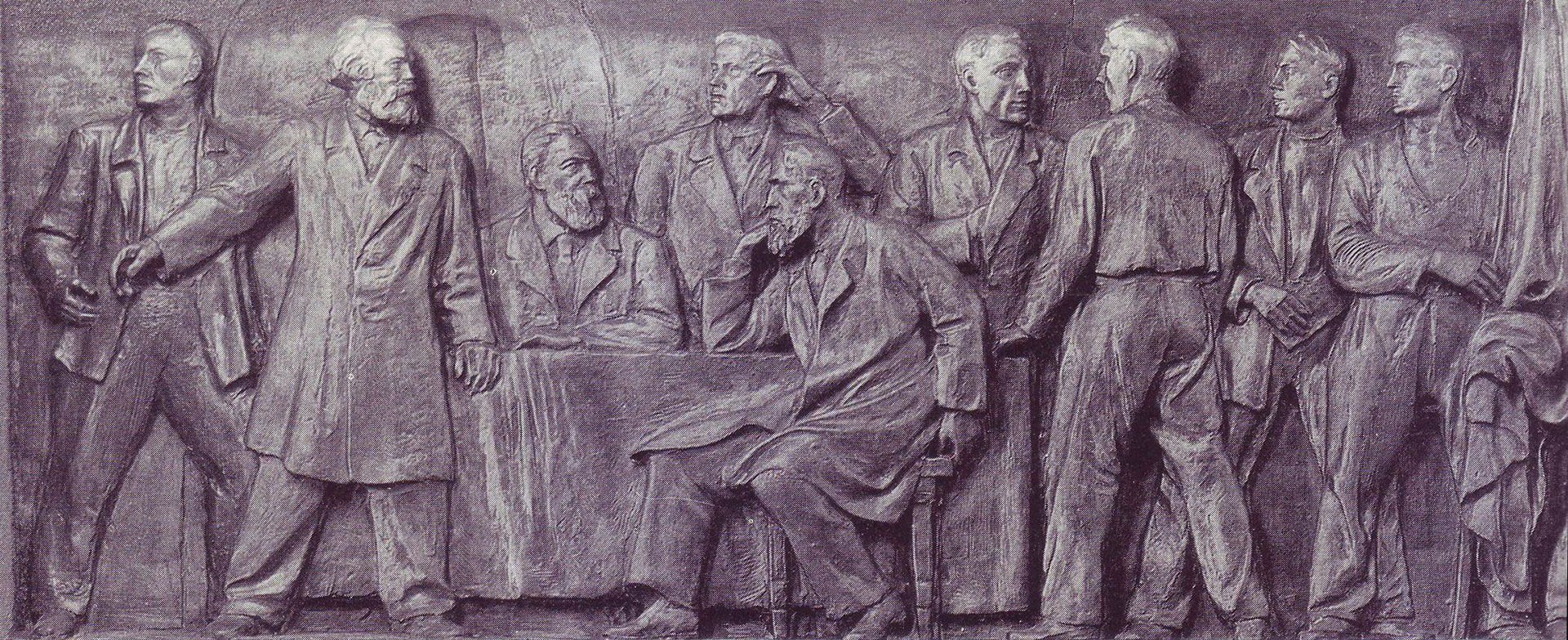
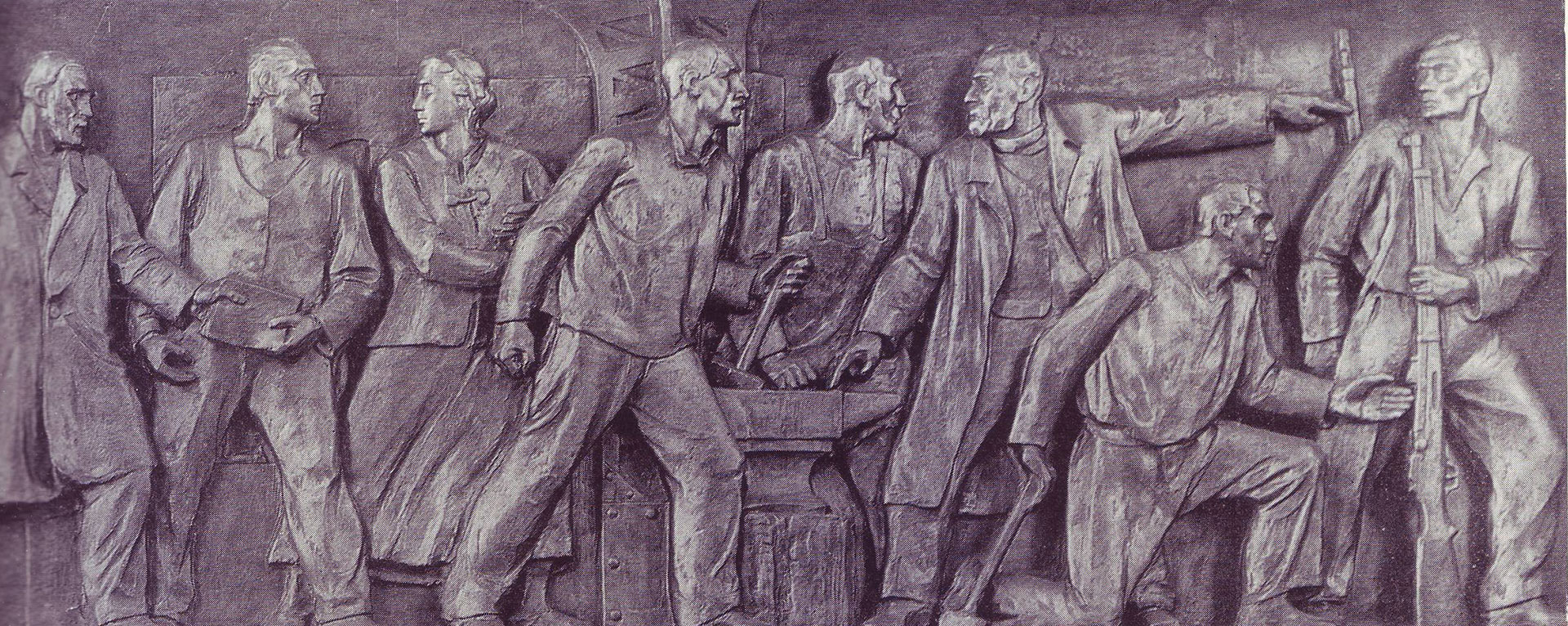
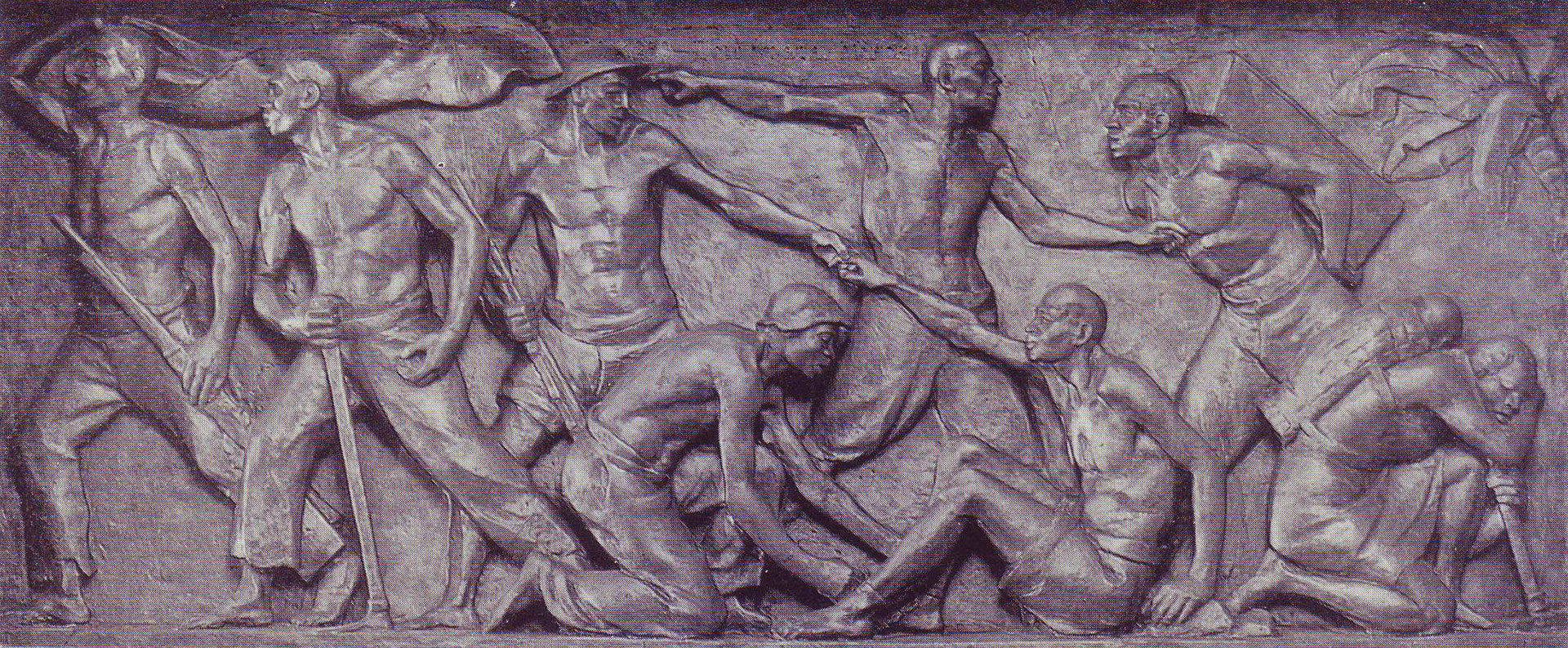
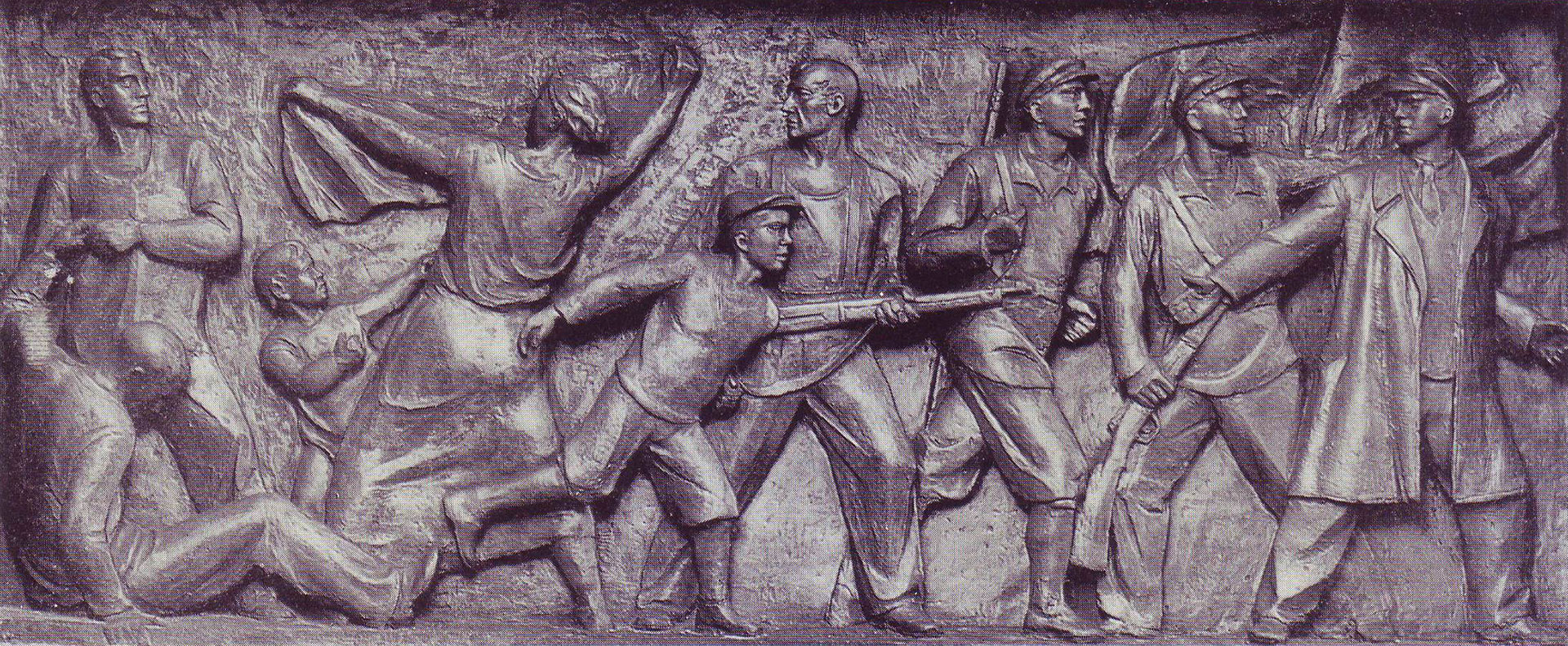
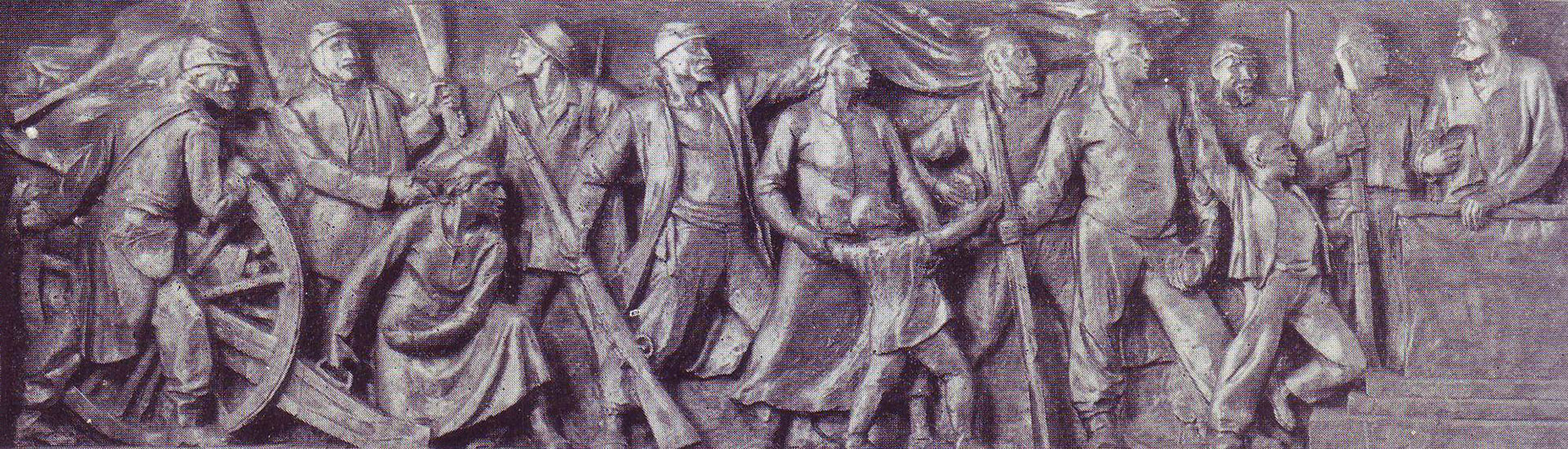
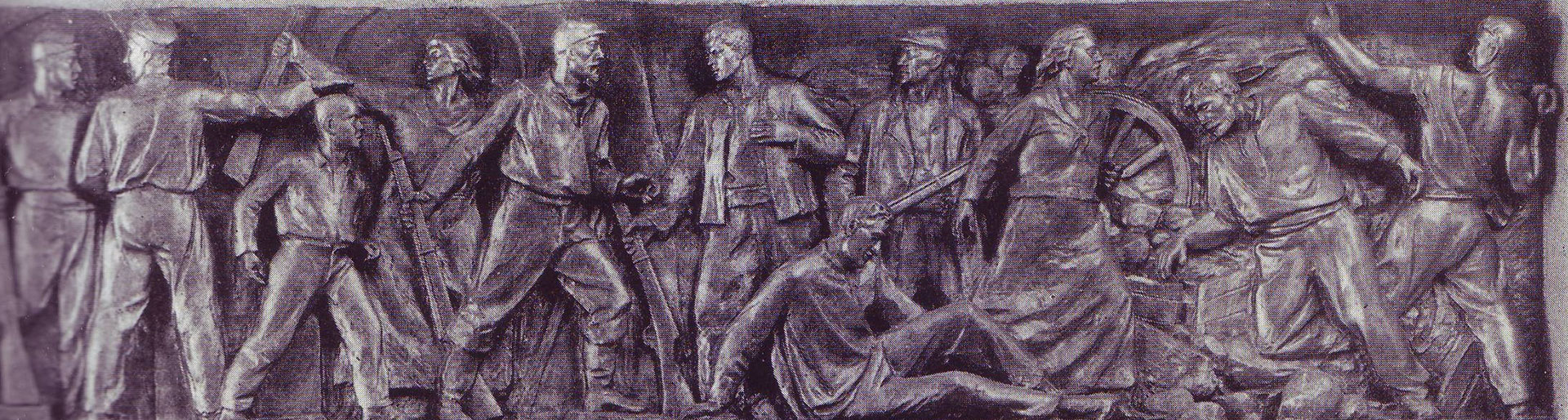
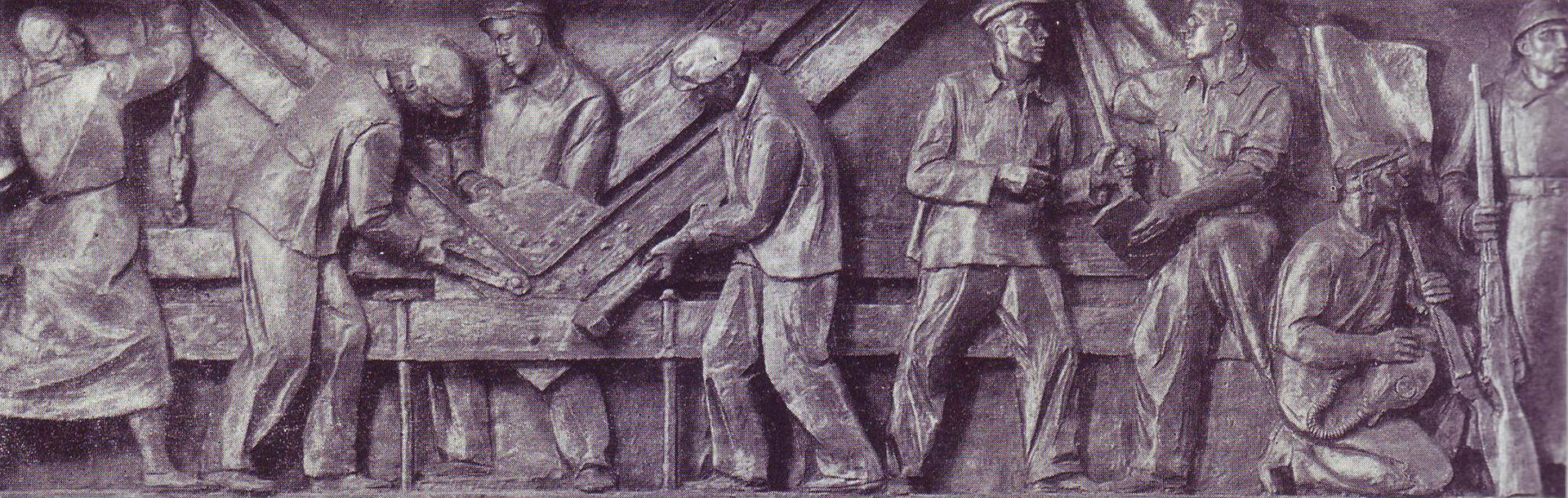
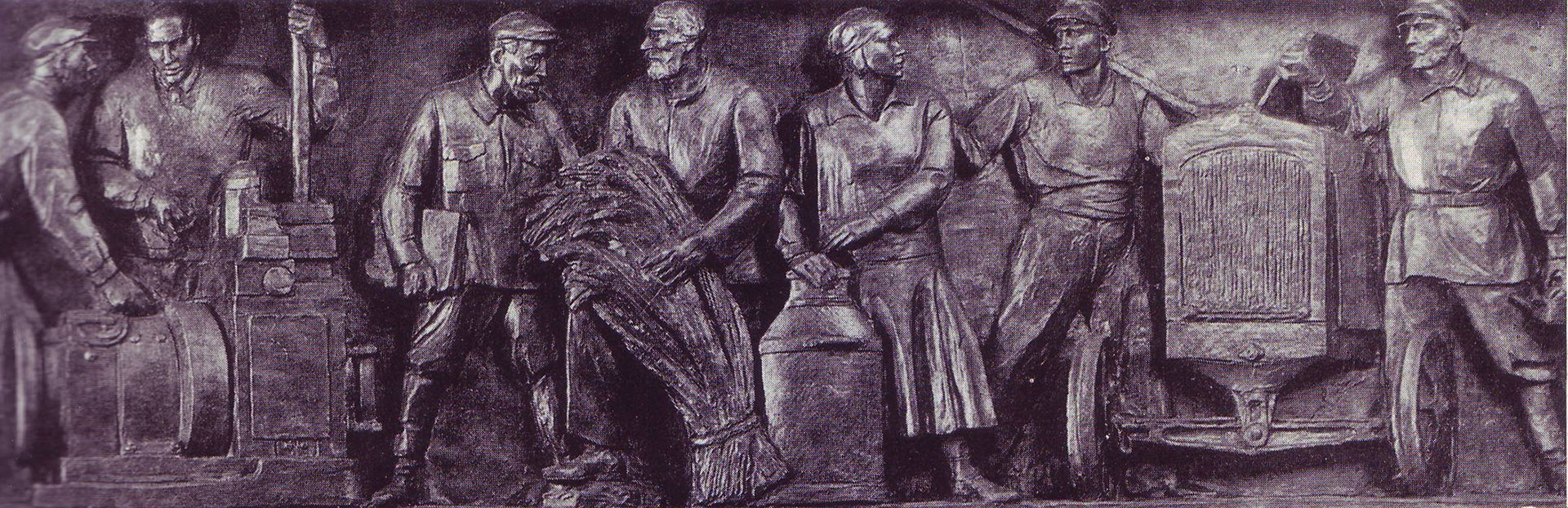
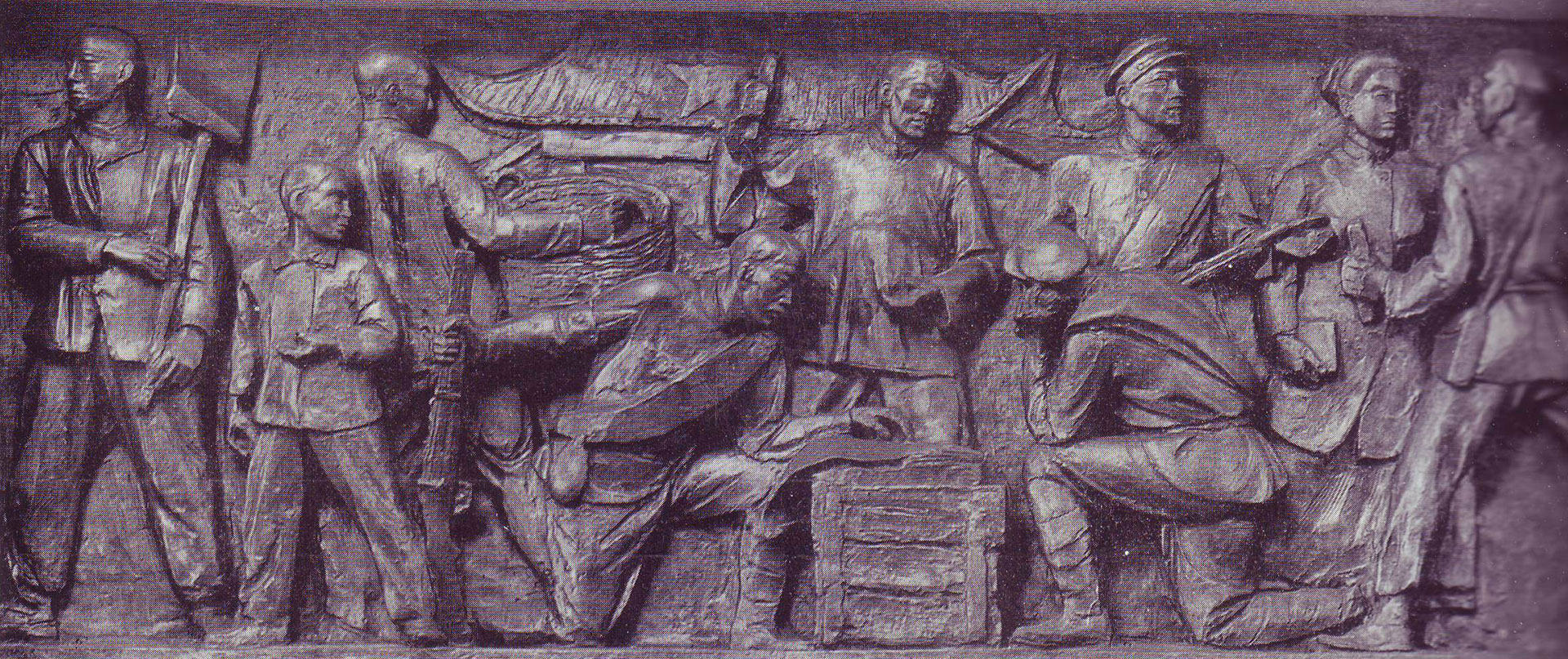
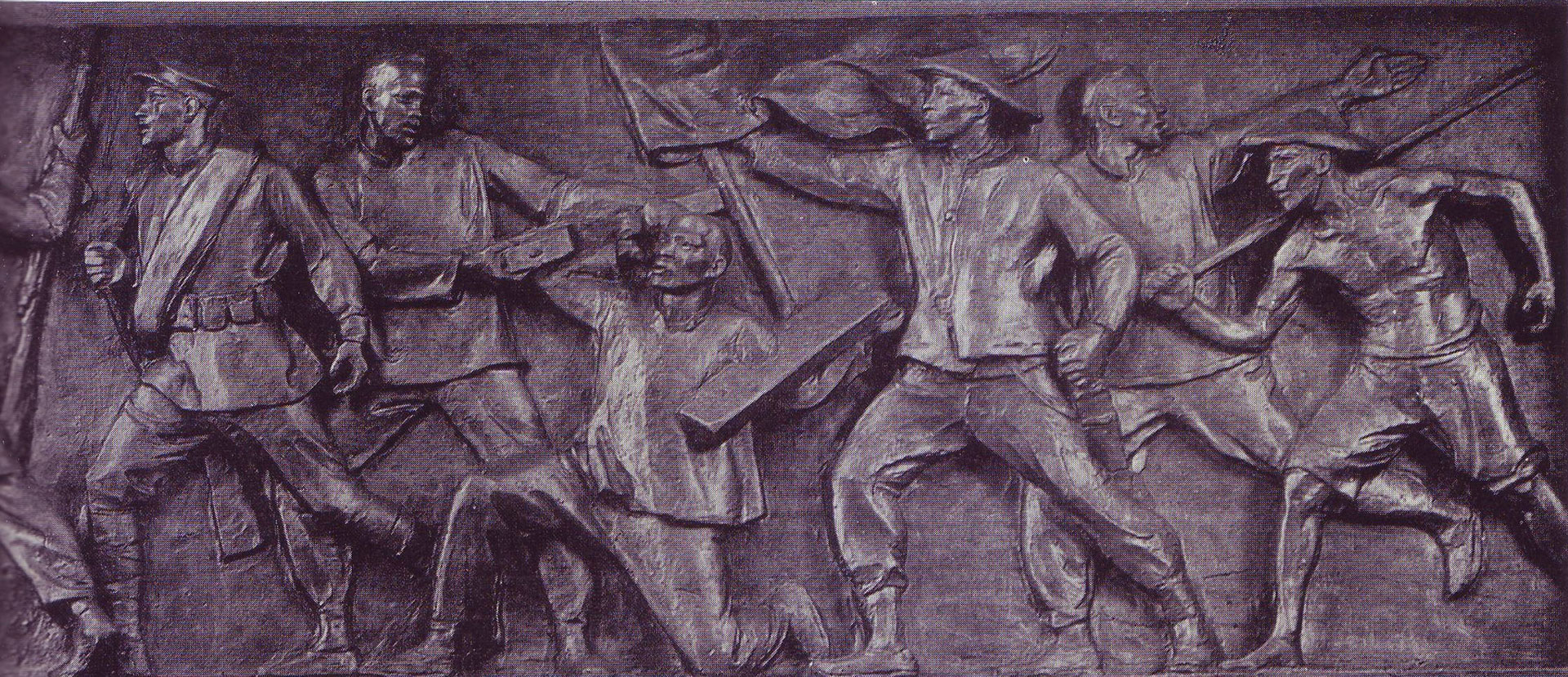
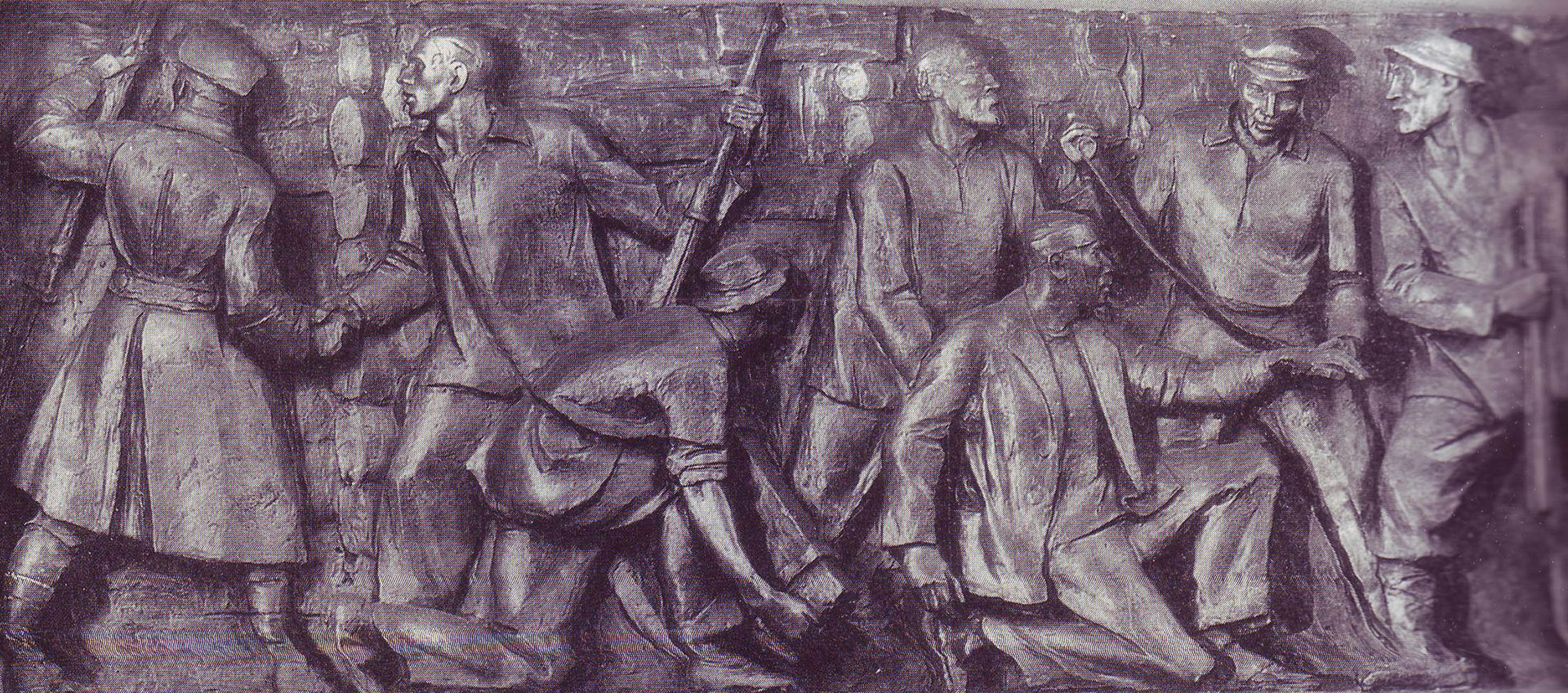
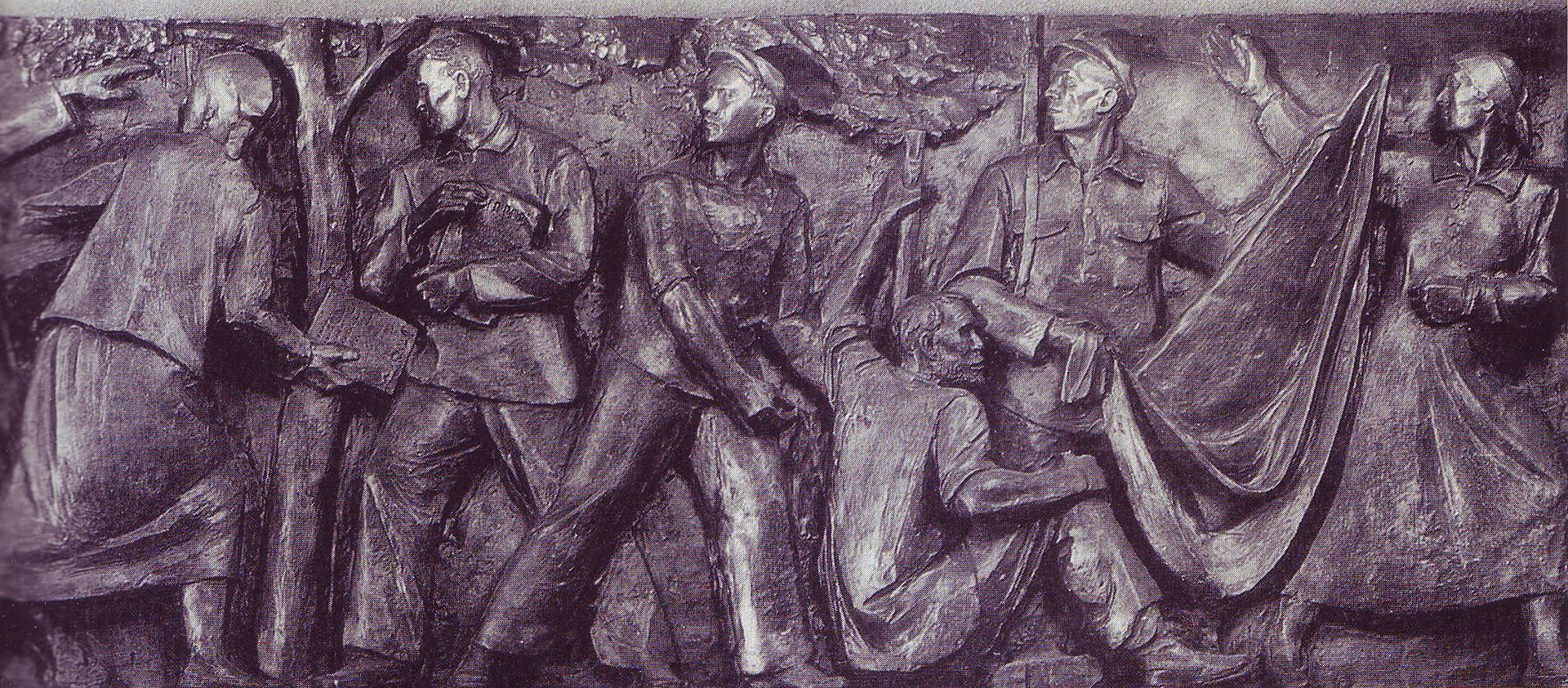
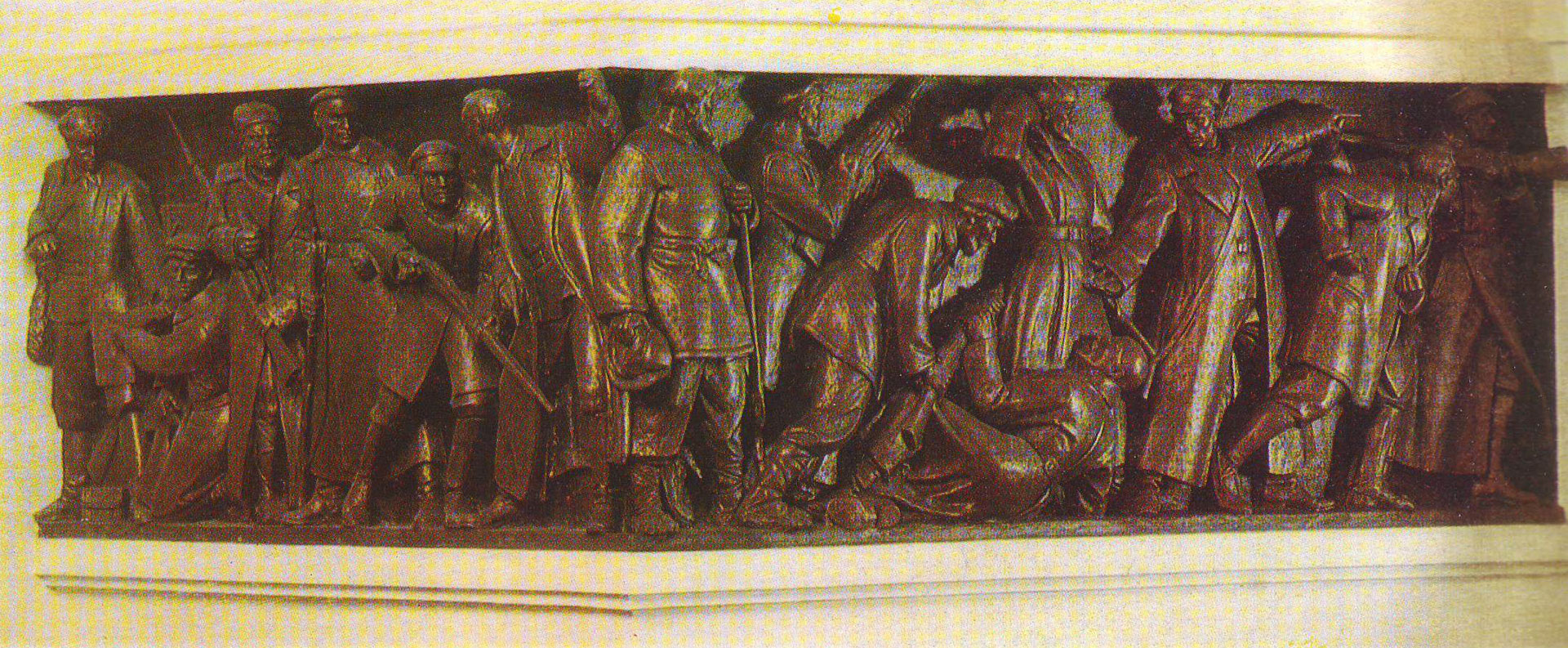
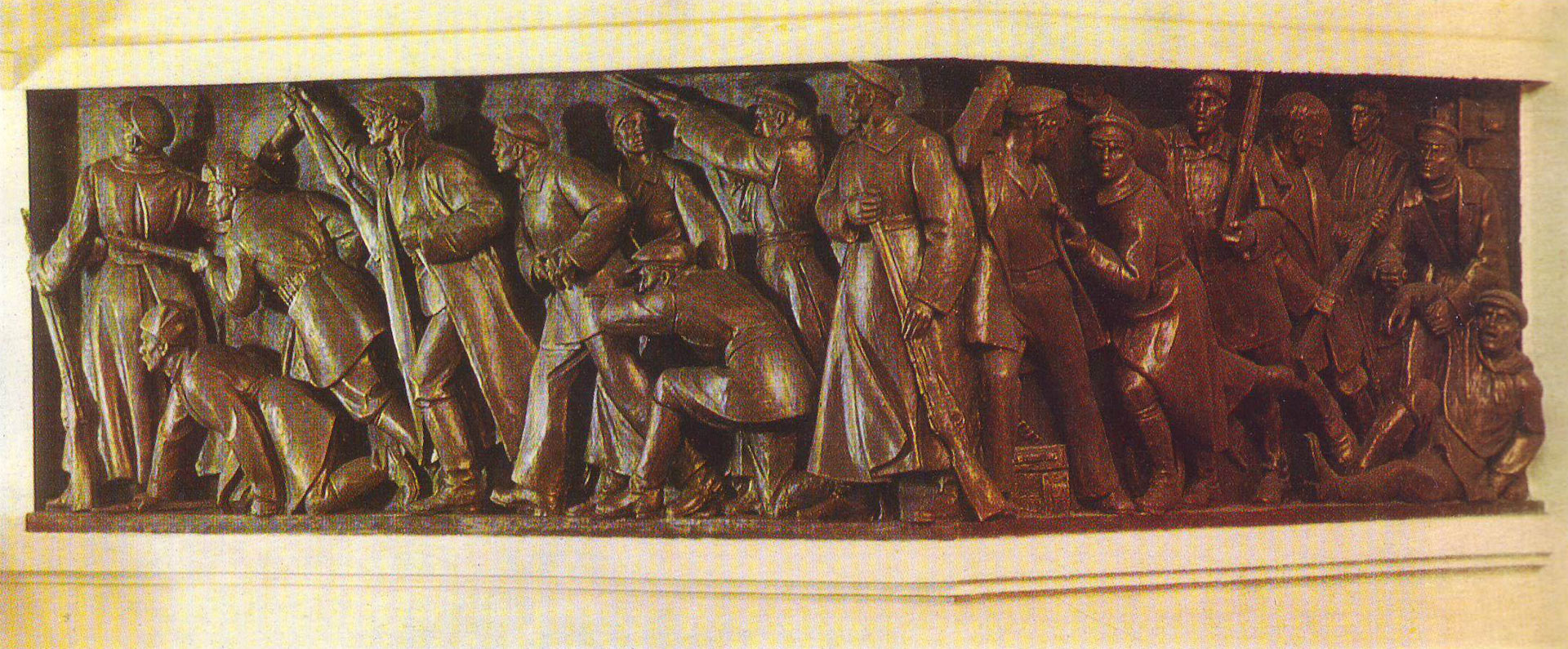
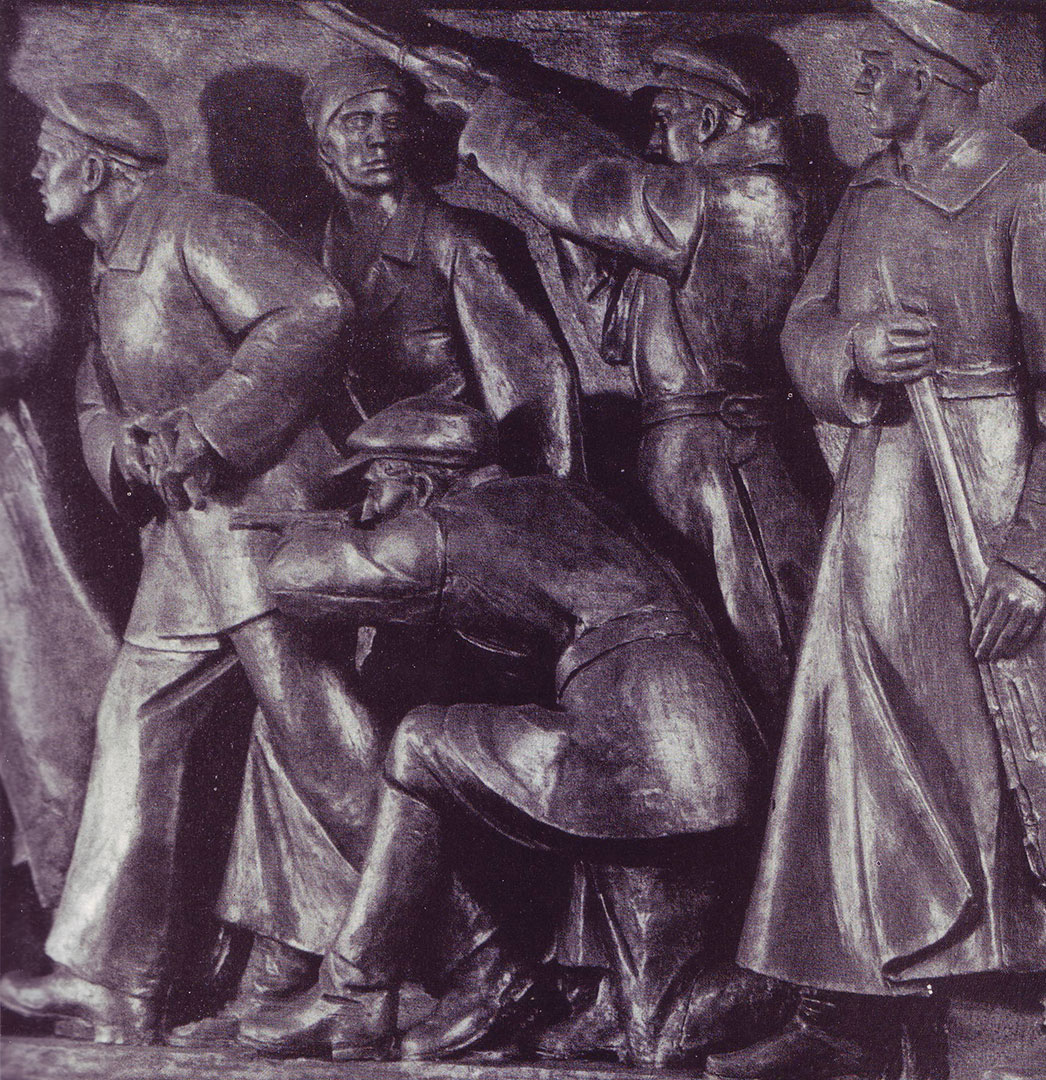
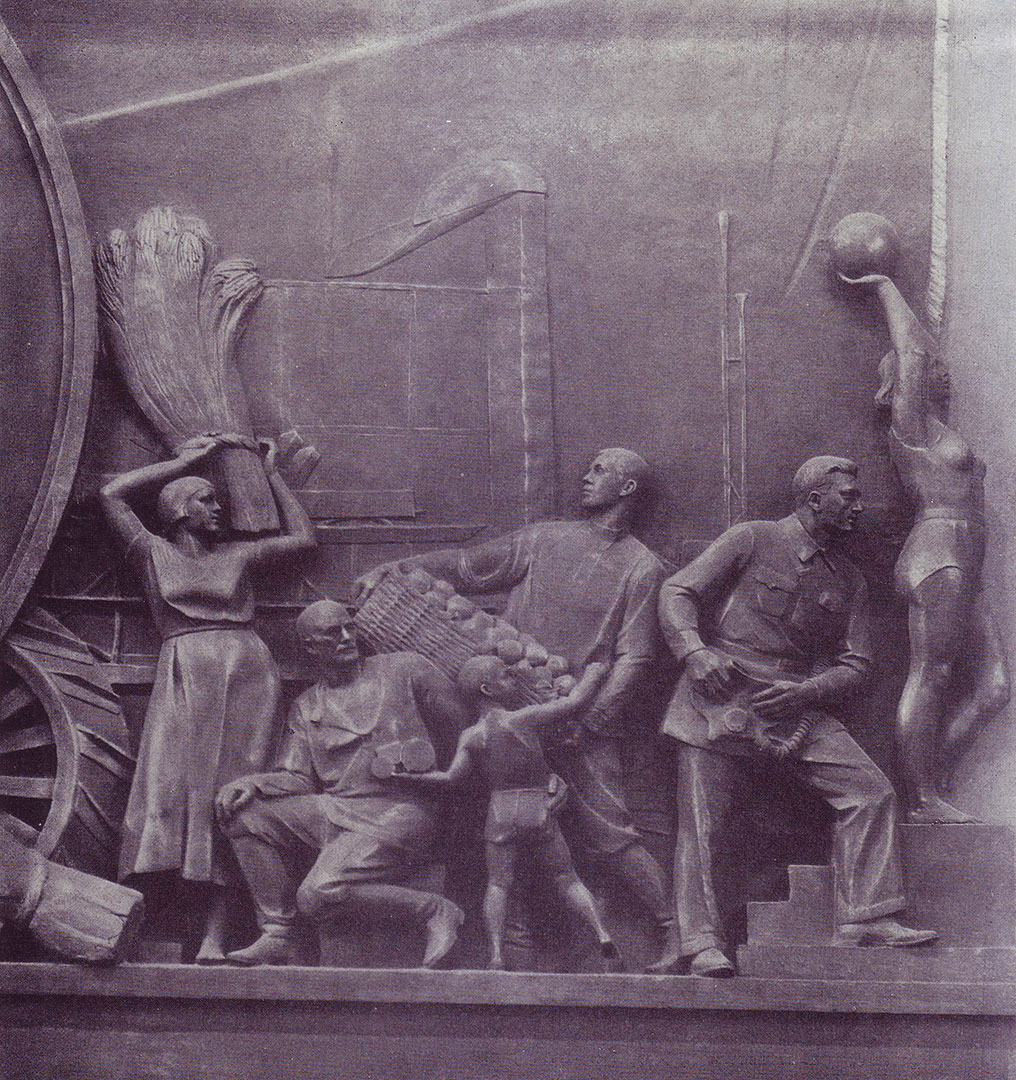
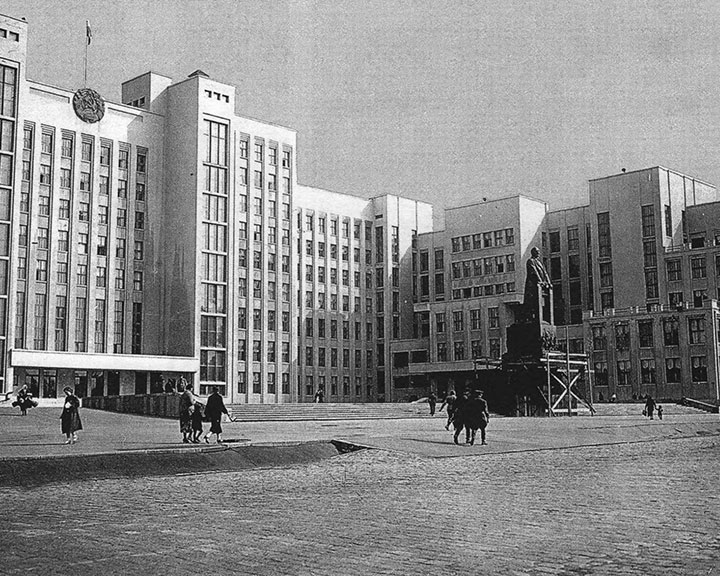
The first monumental work of A.O.Bembel is 18 multi-meter bas-relief compositions, successively arranged in the form of friezes in the interiors of the Government House in Minsk (built from 1930 to 1934 according to the design of the architect I.G.Langbard).
The 26-year-old sculptor received this largest government order after winning a competition shortly after graduating from the Academy of Arts in 1931. The first wife and classmate of A.O.Bembel at the Academy, sculptor Olga Dedok, writes in her memoirs: «The most important thing we lived with now was the composition of sketches of reliefs for the Government House. The topic was the history of the world revolutionary movement. I really liked Andrey’s sketches - lively, fresh and dynamic. … When Andrey went to Minsk with sketches, he returned home with complete victory.»
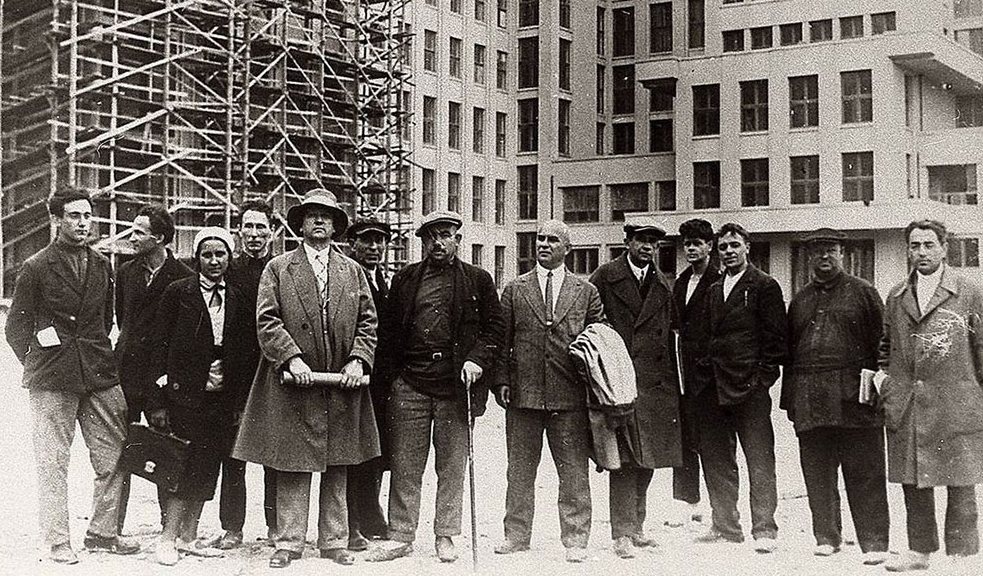
To carry out the sculptural decoration of the building (except for the reliefs, these were busts of the founders of communism and heroes of the revolutionary movement), the art department of the construction of the Government House approved two teams of sculptors under the leadership of M.A.Kerzin. In the spring of 1932, the teams began work.
General supervision of the sculptural work was carried out by the author of the architectural project, I. G. Langbard, and the author of the monument to V. I. Lenin in front of the entrance to the Government House, M. G. Manizer (part of the interior design of the Congress Hall was also made according to his sketches). read more
In the implementation of the approved sketches, Vladimir Ritter and his wife Valentina Rubanik and Georgy Izmailov, his classmates at the Academy of Arts, as well as Alexey Glebov, who recently graduated from the Vitebsk Technical School, worked most closely alongside A.O.Bembel. Olga Bembel-Dedok, who joined the brigade a little later than the start of work, writes in her memoirs: «Even when Andrey’s sketches were accepted, the question arose: who will carry out the work, who to invite from Leningrad. And I named Ritter. Andrey picked up the idea and wrote. Ritter and Valya came willingly. … The entire group of sculptors was youth. The reliefs were supervised by Matvey Genrikhovich Manizer, Andrey’s favorite professor. The team of bust sculptors was led by Mikhail Arkadyevich Kerzin, the same one to whom Bach, our Roman Romanovich, treated so respectfully.».
The sculptors lived and worked right in the Government House building under construction, where, by order of the Chairman of the Council of People's Commissars of the BSSR M.M.Galadzed, two large rooms were allocated for workshops. One of them, located on the second floor of the left wing of the building, was given to A.Bembel and W.Ritter to work on reliefs.
Basically, all 18 high-relief compositions by A.Bembel were created there. This:
- a cycle of 5 compositions (1932-1934), located above the entrance to the Lobby Hall and united by the common theme «Revolutionary struggle in the past»: «Paris Commune» (in the center); on the left – «Barricades of 1948 in Paris» and «Gracchus Babeuf. Conspiracy of “Equals” of 1796»; on the right - «Proclamation of the Communist Manifesto» and «Rise of the Spartacus Union»;
- a cycle of 5 compositions (1932-1934) on the wall opposite the entrance to the Lobby Hall, united by the common theme «Socialist construction and the revolutionary struggle of workers in capitalist countries»: «The First Five-Year Plan in Action» (in the center); on the left - «Peasant uprising in Western Belarus, occupied by bourgeois Poland in 1923-1924» and «Ernst Telmann - leader of the Communist Party of Germany», on the right - «Revolutionary China» and «Colonial peoples rise to revolutionary struggle»;
- a cycle of 7 compositions (1934-1936) inside the meeting room of the Presidium of the Supreme Council of the BSSR, united by the common theme «Building socialism in Belarus»: «Young aircraft modelers», «Assembling cars», «In the laboratory of a scientist», «Theatre», «Architecture» and sculpture», «In the footsteps of Michurin» and «Recreation and physical education»;
- high relief composition «The People of the Land of Soviets», dedicated to the heroism of socialist construction and located on the wall behind the presidium in the congress hall of the Government House. The sketch of the composition was developed by A.Bembel, and the actual work was carried out with the help of V.Ritter and G.Izmailov under the supervision of M.Manizer;
In this case, for M.Manizer, the consistency of this central composition for the hall with two corner bas-reliefs (both 10 meters long) bordering the outer and inner side walls - «October in Petrograd» and «October in Belarus» was important. The sketches of these friezes were created by M.G.Manizer himself, and A.Bembel participated in their execution in full size as part of a team of sculptors under the direction of M.A.Kerzin.
The sculptural design of the interiors of the Government House of the BSSR became a school of excellence for A.O.Bembel, as well as for all young sculptors participating in the project. Close collaboration with such outstanding masters as I.A.Langbard, M.G.Manizer and M.A.Kerzin made it possible to master in practice the principles of large-scale correlation of architectural space and sculpture and to cope with the gigantic volume of the project at such a level that the architectural The sculptural ensemble of the Government House in Minsk immediately became one of the textbook examples, becoming for many Soviet architects and sculptors the standard for the synthesis of sculpture and architecture. hide part
Fragment from the documentary film «Andrey Bembel: Death, Victory, Glory» (2009, scriptwriter - Tatyana Bembel, production director - Andrey Kutilo).